

Search Website
Assessment and Grading for Large Classes
If you would like to complete the corresponding activity with this webpage, please download the worksheet resource here. If you would like a refresher on assessment in general before diving into assessment in large classes, please visit our Background on Assessment page.
Assessment is one of the most time-consuming parts of teaching any course, a challenge which is compounded when teaching large undergraduate classes. Here, we will walk you through considerations for assessment and how to (re)design assessment for large classes.
Assessment Introduction
Why do we assess students? What are the goals and what do we hope to accomplish?
When thinking about assessment in any class, and large classes in particular, it is important to recognize that assessment does many things: it can measure learning, track progress, provide feedback, identify teaching gaps and provide opportunities to apply learning. Talking about assessment in relation to courses and course work in particular often means we focus on assignments as a substitute for assessment, but this does not need to be the case (see for example additional material from the Cambridge Assessment Network).
Assessment can be categorized into three types. Assessment of Learning (AOL) refers to the high-stakes summative assessments often thought of in courses, like exams. Assessment for Learning (AFL) refers to the low-stakes formative assessments which support learning and build towards the skills and knowledge needed to be successful on AOLs such as weekly quizzes and discussions. Assessment as Learning (AAL) refers to the metacognitive assessments which have students consider and track their learning such as reflection activities. See this resource for further details: Assessment of/for/as Learning
As you develop your course, considering each of these assessment types is necessary and requires meaningful alignment and strategic design decisions to design effective assessments which offer students a chance to receive feedback and apply their learning, without burning out instructors and TAs from marking.
Assessment in large classes does not need to mean more grading, but it does require considerations and thoughtful alignment between learning outcomes and assessments. Where possible consider opportunities to offer AFLs and AALs which allow students to prepare for AOLs but do not require significantly more grading burden, or consider reallocating time from summative AOLs to other assessments.
Aligning Your Assessments
In thinking about your assessments and what to include, follow a backwards design approach to consider what your course needs, rather than starting with what assignments you want to integrate.
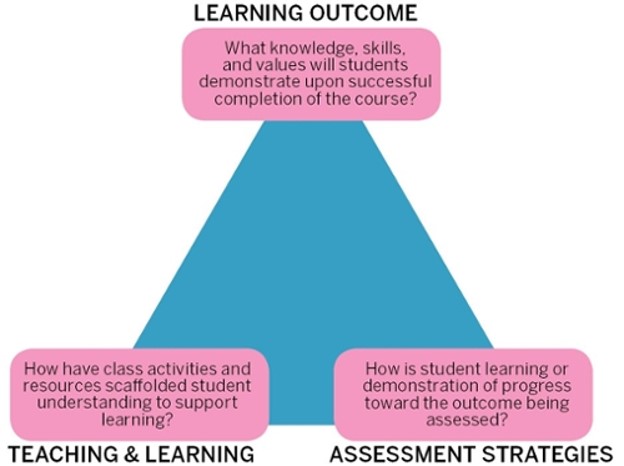
Figure 1: Constructive curriculum alignment
You can do this by starting with your course learning outcomes and determining what you need evidence of with each assessment. You can then decide which AOLs you need to assess these and determine which AFLs and AALs you need to support students in completing your AOLs effectively. Importantly for your AALs and AFLs, you want to focus on practice of key skills needed to succeed on the AOL as well as opportunities to provide students with comments to improve future work (often called feedforward: actionable steps for improvement targeting upcoming assessments). Some key questions to consider are:
- What assessments are needed to know your learning outcomes are met?
- What assessments will scaffold towards these necessary assessments?
- How can other activities and assessments be designed to allow practice and feedforward with limited marking capacity?
Strategies for Providing Sustainable Feedforward on Assessments
Where feedback explains strengths and weaknesses in completed work and justifies a grade or evaluation, feedforward (see resources in this article from Education Science and Assessment and Evaluation in Higher Education) focuses on what students should do next and provides actionable steps for improvement, targeting future assessments. Feedforward shifts the focus from identifying what is ‘right’ or ‘wrong’ on each assignment towards moving students from where they are to where they need to improve on the next assignment. The goal then becomes helping students make incremental improvements that are within reach (i.e. moving from work that earns a 65% to work that earns a 70%), rather than identifying everything that is wrong with a submission compared to a perfect submission. Importantly, feedforward does not need to mean individual, tailored comments across multiple assessments, there are numerous strategies which can enable feedforward on AFLs and AALs but do not overburden reviewers. These include:
- In-class practice activities: Completing activities, individually or in groups can allow students to practice with the skills needed for the AOL. It can also allow students to hear others’ approaches and perspectives to these assessments to support their own approach.
- Peer or self-assessment: If the goal of your assessment is to offer students feedback, assigning students to swap with a peer or assess their own work can fill this need with only administrative coordination from the instructional team. Specific areas to look for, and well-developed comment sheets are important to support meaningful comments and fair evaluation in these settings.
- Checklists: If students are submitting an assessment, a checklist can streamline grading. These can be adapted to be pass/fail or structured like a rubric with levels to inform students of where their work sits currently and what they should focus on in future submissions.
- Exemplars with commentary: Exemplars are a strong means to demonstrate to students what work at various levels looks like. Whether shared with permission from previous years’ students, or created by the teaching team to share, exemplars paired with commentary explaining why specific elements of assessments achieved specific grades can be a powerful tool to model effective practices to students.
- Whole-class feedback comments: Some assessments may be well suited to offering whole class rather than individual comments. These comments focus on specific areas of strength and weakness noted across assignments for the whole class and allow students to understand where they need to improve, and where they may be already demonstrating knowledge or skills below/similar/above those of their classmates.
Strategies for Assessment and Grading of AOLs at Scale
While some assessments are well suited to feedforward and require limited grading, others, such as summative AOLs still require grading. Below we offer some suggestions for strategies to keep assessments manageable, divided by design strategies and comment strategies (see additional material on this York University and the University of Calgary).
Design Strategies
- Consider where group assessments might be feasible: In some cases, well-designed group assessments can divide the amount of grading considerably in courses. Detailed instructions on how to work in groups as well as comments about how students are expected to work together are important framing (i.e. can they divide and conquer or are they expected to work collaboratively throughout). While other grading elements (such as peer grading) can of course add to the grading workload, such strategies can still be beneficial.
- Chunk larger assessments into smaller assessments: Rather than having one large AOL due at the end of the course, which requires lots of grading time, breaking the assessment into smaller chunks can spread out the grading over the course of the term and offer multiple opportunities for feedback. Instead of, for example, having a final essay due in week 12 which requires 30 mins of grading per paper, you can break this out to include a draft research question due in week 3 which is evaluated using a checklist style rubric, an annotated bibliography due in week 6 with specific comments around source selection and relevant, a peer evaluation of an essay outline due in week 9 and the final essay due in week 12 with a detailed rubric and comments limited to greatest strengths and areas for improvement.
- Consider what sized assessment is sufficient to determine achievement of ILOs: In some cases, there are specific requirements by department or program for assignment length, such as word count or number of questions. With this in mind, considering whether you need to exceed this in order to assess students is important. If for example, your ILO is for students to be able to critically engage with research methodologies, a report of 3,500 words may not better demonstrate this than a report of 1,500 words if well designed, but would of course take longer to mark.
Comment Strategies
- Focus on limiting comments to greatest areas of need: While it is tempting when grading assessments to offer line by line revisions and comments, such comments are unnecessary to support student growth and can even be overwhelming. Consider instead, offering detailed comments on one sub-section of the assessment if needed to model practices for students, and limit summative comments to 2-3 strengths and 2-3 areas for growth for future assessments.
- Specific rubrics tied to learning outcomes: Well-designed rubrics can limit the amount of written feedback for a student’s work. Rubrics which incorporate specific performance elements and describe what students need to demonstrate in order to achieve each grade can inform students of where their work sits without requiring additional comments.
- Feedback symbol and comment banks: When grading the same assessment, often the same comments apply to multiple students. Rather than writing these comments out each time, incorporating a ‘bank’ of some kind can streamline these comments. A symbol bank would have a set list of symbols which is provided to students, with each symbol aligning with a specific comment. For example * might mean incorrect application of concept. A comment bank is a collection of feedback given to students which can be copied between students with limited or no editing. If, for example, students routinely apply strong reflection on a concept, you might write out a comment which demonstrates this and copy and paste this for each relevant student in their summative comments, rather than writing it from scratch each time.
- Consider use of technologies to support grading: Western-supported technologies such as Gradescope have been developed to streamline grading and feedback on both paper and PDF assessments.
Example assessments at scale in large classes
Below, we offer examples of considerations (with additional material available from Brock University and York University) of how you may scale common assessments for large courses across various disciplines. If you would like to discuss how you might develop a specific assessment, feel free to reach out at ctl@uwo.ca.
Writing assessments are common AOLs across disciplines, such as essays in the humanities and social science disciplines, or project and lab reports in STEM fields. Due to the relatively large scale and various ways students can complete the assessments, these can be time consuming to assess in large classes, especially if you are offering extensive feedback on final drafts.
Some strategies to navigate scaling writing assessments include:
- Focus on and assess only your learning outcomes: In starting with your learning outcomes, you are able to determine what you need to focus on and limit other factors which are not needed in your assessment. This can help keep the scope (i.e. an essay applying a chosen topic from a course list vs. an essay on any loosely defined topic) and length (i.e. 1500 words vs. 3,000) manageable.
- Encourage clear structure: Consider where consistent structuring across assignments may support assessors in finding information to grade and build this into the assessment, if applicable, to support streamlining grading. Especially for material such as reports or briefs, clear structure, such as the use of headings and sub-headings may even be an assessment criterion.
- Provide opportunities for feedforward through chunking: Building in a proposal phase, such as a draft research question or problem statement graded by a rubric and an essay outline with a peer feedback component can offer students feedback earlier in the process and limit the grading burden of the final submission.
- Develop an ILO aligned rubric: A well-developed rubric keeps your (and your TAs’) grading focused and limits the amount of comments required, as the rubric offers feedback.
- Make extensive use of comment banks: Focus on limiting the comments to areas that would improve student work and limit the amount of copy editing that you do throughout, offering a handful of clear summative comments focused on strengths and opportunities for growth.
Midterm and final exams are common, and in some cases required, in large junior undergraduate courses across disciplines. While some formats, such as True/False and Multiple Choice questions (MCQs) are easier to assess quickly, open ended questions offer value for students to show their work and receive credit for partially correct answers, though such questions can create a large grading burden.
Some strategies to navigate scaling exams include:
- Consider an exam blueprint: In developing the exam, consider which areas are required to be assessed to meet the course ILOs, and map out the number and significance of questions to determine if the ILOs have been met. This helps prevent over testing in certain topics and ensures all necessary topics are covered.
- Make strategic use of MCQs: While MCQs should not be the entirety of your exam, using MCQs to assess knowledge and understanding for a smaller portion of the exam can help the assessor understand students’ baseline knowledge while also limiting the grading requirement. Guidance on creating MCQs can be found through the CTL website.
- Have a clear rubric or solution set: When grading open ended questions, having a predetermined rubric which directs grading, or a solution set which outlines the correct steps in order to achieve marks will streamline grading and keep practices standardized across TAs. Where questions have more than one possible answer, ensure that the rubric or solution set reflects this and that this is communicated with all who are grading
- Align questions with goals to limit response variance where possible: While designing questions, consider where students may take alternative approaches to answering questions. If the goal is for students to answer the question or make decisions, allowing this choice may be valuable, but if the goal is to see if students can use a specific method, requiring students to use a specific approach, and stating this in the question can allow assessors to streamline their grading.
- Limit questions which expand on each other: While a benefit of open-ended exam questions is that students can get credit for partially correct answers, this means that if answers are not fully correct, errors will follow between questions. This requires greater attention to give future marks for the process if an incorrect answer is carried forward. Creating questions which are unique and self-contained limits error carry-forward and prevents additional workload from tracing process throughout.
Additional Resources
Beadle, J. (2025, January 10). What and why do we assess in the classroom? Cambridge Assessment Network and Research. https://www.cambridgeassessment.org.uk/blogs/what-and-why-do-we-assess-in-the-classroom/
British Columbia Institute of Technology. (2010). Developing checklists and rating scales. Learning and Teaching Centre. https://www.bcit.ca/files/ltc/pdf/ja_developchecklists.pdf
Centre for Teaching and Learning, Western University. (n.d.). Backward course design. Western University. https://teaching.uwo.ca/curriculum/coursedesign/backward-design.html
Earl, L. M. (2003). Assessment of learning, for learning, and as learning (Chapter 3). In Assessment as learning: Using classroom assessment to maximize student learning. Corwin Press. https://web.uvic.ca/~thopper/iweb09/GillPaul/Site/Assessment_files/Assessment.pdf
Elkhoury, E. (2021). A guide to large classroom assessments (Version 1.2). Teaching Commons, York University. https://www.yorku.ca/teachingcommons/wp-content/uploads/sites/38/2021/02/Guide_large_classroom_assessments_FINALa.pdf
Fleckney, P., Thompson, J., & Vaz-Serra, P. (2025). Designing effective peer assessment processes in higher education: A systematic review. Higher Education Research & Development, 44(2), 386–401. https://doi.org/10.1080/07294360.2024.2407083
Foster, S. (2023, October 31). Effective assessment methods for large enrolment classes. Times Higher Education Campus. https://www.timeshighereducation.com/campus/effective-assessment-methods-large-enrolment-classes
Levy-Feldman, I. (2025). The role of assessment in improving education and promoting educational equity. Education Sciences, 15(2), 224. https://doi.org/10.3390/educsci15020224
Moss, P. (2024, February 23). Cut down your marking time by using whole-class feedback. Times Higher Education Campus. https://www.timeshighereducation.com/campus/cut-down-your-marking-time-using-wholeclass-feedback
Orsmond, P., Maw, S. J., Park, J. R., Gomez, S., & Crook, A. C. (2013). Moving feedback forward: Theory to practice. Assessment & Evaluation in Higher Education, 38(2), 240–252. https://doi.org/10.1080/02602938.2011.625472
Prozesky D. Assessment of learning. Community Eye Health. 2001;14(38):27-8. PMID: 17491913; PMCID: PMC1705919. https://pmc.ncbi.nlm.nih.gov/articles/PMC1705919/
Saeed, N., & Mohamedali, F. (2022). A Study to Evaluate Students’ Performance, Engagement, and Progression in Higher Education Based on Feedforward Teaching Approach. Education Sciences, 12(1), 56. https://doi.org/10.3390/educsci12010056
Schellekens, L. H., Bok, H. G. J., de Jong, L. H., van der Schaaf, M. F., Kremer, W. D. J., & van der Vleuten, C. P. M. (2021). A scoping review on the notions of Assessment as Learning (AaL), Assessment for Learning (AfL), and Assessment of Learning (AoL). Studies in Educational Evaluation, 71, 101094. https://doi.org/10.1016/j.stueduc.2021.101094
Teaching and Academic Programs, McGill University. (n.d.). Use exemplars to clarify assessment expectations. McGill University